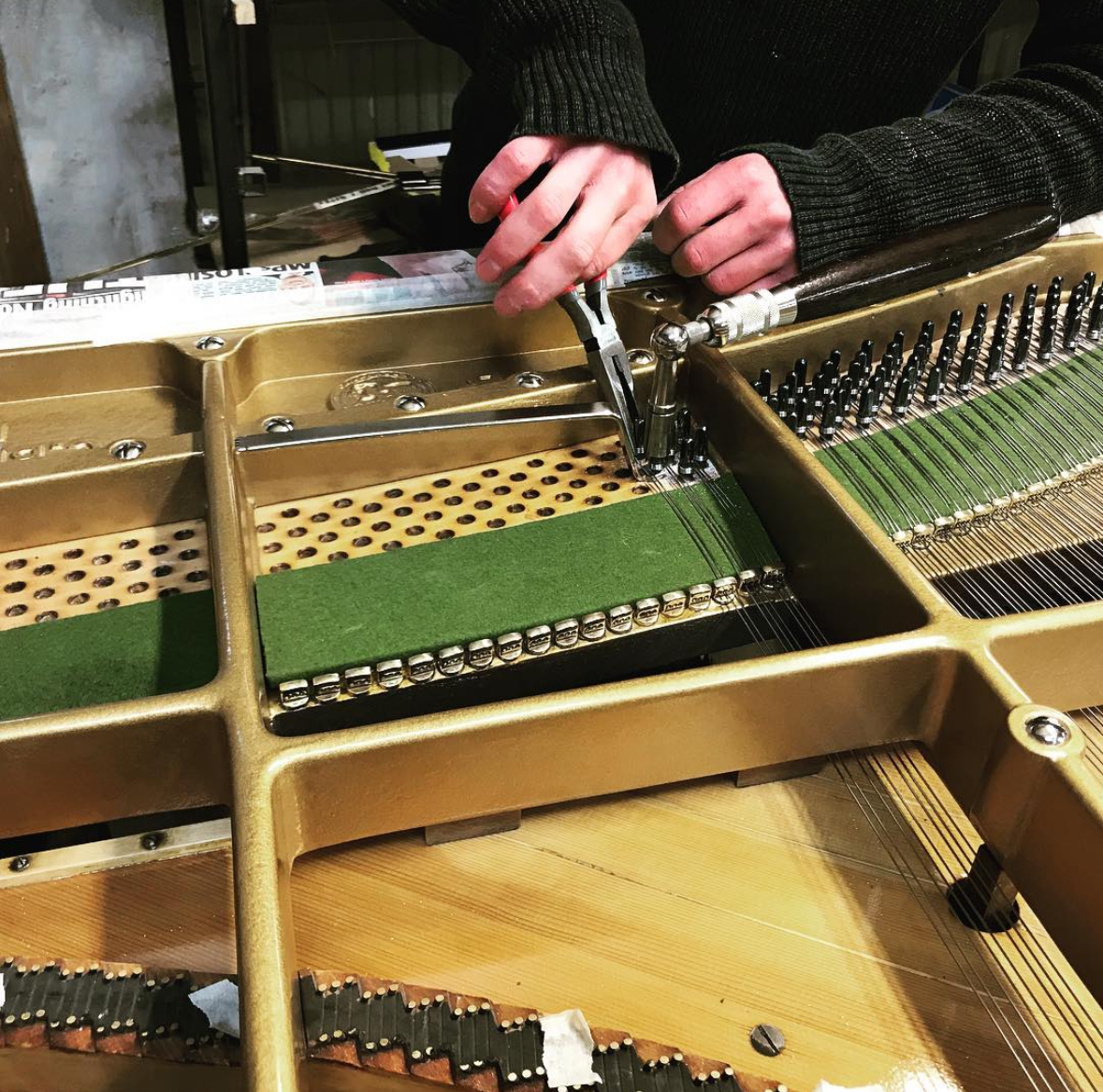
Restringing
Piano Strings and Sound Quality
The tone and character of a piano are created by the vibration of its strings, making their condition and quality essential to the instrument’s overall performance. High-quality piano strings play a crucial role in tuning stability, volume, sustain, and tonal clarity.
Early stringed instruments were fitted with materials such as gut, iron, and brass, which offered limited durability and tonal consistency. Over the past 140 years, developments in metallurgy have transformed piano string manufacture. Modern piano strings are produced from high-tensile carbon steel, refined to be exceptionally pure, with minimal levels of impurities such as phosphorus, sulphur, and nitrogen. This purity ensures consistent density, reliable tuning, and a rich, balanced tone.
The wire-drawing process used in modern piano string production guarantees uniform diameter and precise tension. Piano strings are engineered for optimal hardness, flexibility, resilience, and corrosion resistance, allowing them to withstand heavy playing while maintaining tonal stability over many years.
Stringing a Piano
A modern piano typically contains between 220 and 240 strings. Most mid-range and treble notes use three strings per key, while bass notes usually use two, with the lowest octave often having a single string per key. This carefully designed layout creates even volume and tonal balance across the keyboard.
Bass strings are specially constructed for low-frequency notes. Each consists of a steel core wire wound with one or more layers of copper, brass, or steel. The added mass allows the string to vibrate at lower pitches while maintaining the high tension required for depth, power, and sustain in the bass register.
When Piano Strings Need Replacing
Like all stringed instruments, pianos will eventually require string replacement or full restringing. Over time, piano strings lose brightness, resonance, and tuning stability due to:
High string tension: Continuous stress causes gradual stretching and loss of tonal richness
Age: Even premium music wire degrades over time, increasing the risk of breakage
Regular or heavy use: Frequent hammer strikes accelerate metal fatigue
Manufacturing quality: Lower-grade wire deteriorates more quickly and affects sound quality
Bass string wear: Wound bass strings typically age faster than plain steel strings
Piano repairs: Structural repairs often require removal and replacement of strings
Humidity and moisture: Corrosion dulls tone and reduces resonance, particularly in bass strings
Professional restringing can significantly improve sound quality, restore tonal depth, and enhance the overall performance and longevity of a piano.